

A roof that stays dry through light showers but leaks during a downpour is telling you something. Here’s why heavy rain exposes hidden roofing problems, where the water is likely coming from, and what Hawaii homeowners should do before the next storm hits.
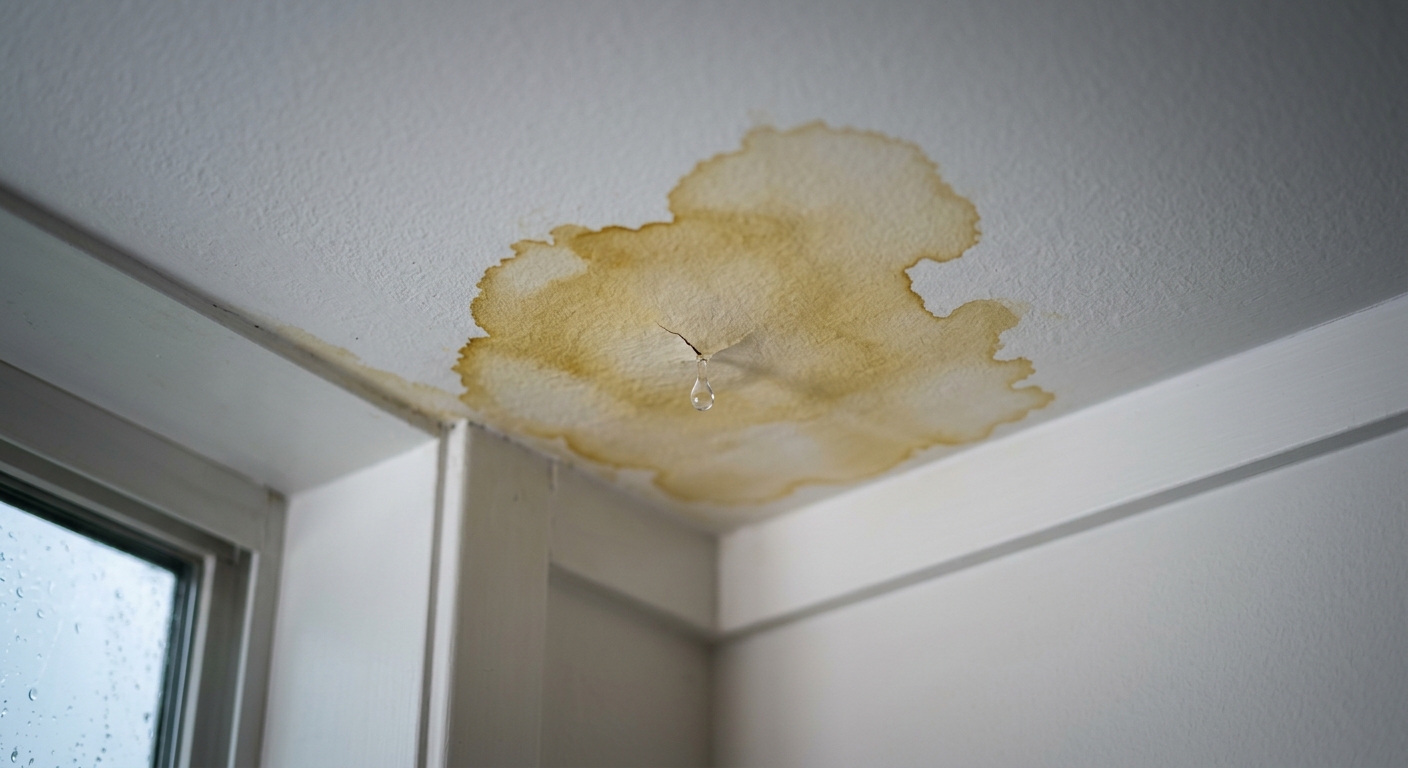
It usually starts small. The rain picks up, and an hour or two later you notice a water stain spreading across the ceiling, a drip near a window, or a damp patch that definitely wasn’t there yesterday. Then the storm passes, the ceiling dries out, and the leak seems to disappear along with it.
A lot of homeowners assume that means the problem solved itself. It didn’t. If your roof handles a normal shower fine but starts leaking once the rain gets heavy, that’s usually a sign of a weak point that ordinary rainfall just isn’t strong enough to reach — not a one-off fluke caused by an unusually bad storm.
Higher water volume, longer stretches of rain, and wind pushing water sideways can all work their way into small gaps, aging flashing, worn-out seals, or drainage that isn’t keeping up. And in Hawaii, where windward communities on Oahu, the Hilo side of the Big Island, and other rain-heavy pockets regularly get hit with intense downpours, that vulnerability doesn’t stay hidden for long. Here’s what’s usually going on when a roof only leaks under pressure.
Why a Roof Might Only Leak When the Rain Gets Heavy
Your roof isn’t just a barrier — it’s a system built to move water off the house before it becomes a problem. Shingles or tiles, flashing, underlayment, valleys, gutters, and drains all work together to route rainwater away from the structure.
During a light shower, a small weak spot might never see enough water to cause a problem. But once the rain gets heavier or more sustained, everything changes: more water is moving across the roof at once, gutters and valleys are handling higher volumes, and wind can push rain sideways instead of letting it fall straight down. Areas that hold up fine under normal conditions can get pushed past what they’re built for. Water only needs to find one way in, and it’s often not where you’d guess.
1. Flashing That’s Loosened, Corroded, or Gapped
Flashing covers the spots where different roofing materials or surfaces meet — around skylights, vents and pipes, chimneys, wall transitions, and valleys. It’s one of the most failure-prone parts of any roof, mostly because it depends on seals and fasteners that wear down over time.
During an average rain, water can slide right past a small gap in flashing without ever getting inside. Give it a few hours of sustained or wind-driven rain, though, and that same gap can be enough. That’s a big part of why a roof can look totally fine for most of the year and then suddenly spring a leak during one bad storm. If flashing is the culprit, our flashing repair services address it directly rather than just patching the symptom.
2. Rain Driven Sideways by Wind
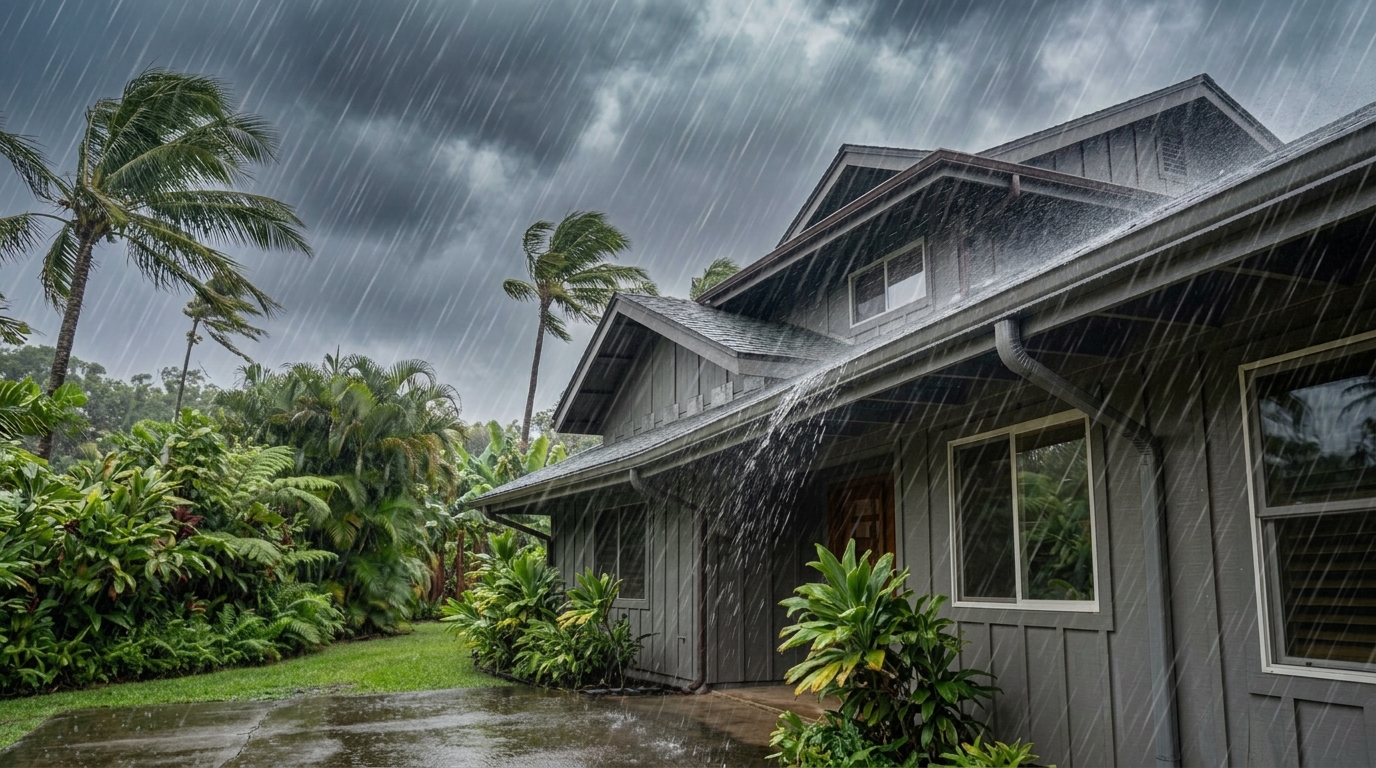
Not all rain falls straight down. When a storm brings strong wind along with it, rain can be pushed at an angle — sometimes nearly horizontal — into areas that almost never see direct rainfall otherwise, like roof edges, soffits, vents, and wall transitions.
This is why leaks can seem inconsistent from one storm to the next: a roof that sheds rain fine when it’s falling vertically can suddenly take on water when wind changes the angle of attack. It’s especially common on windward-facing homes in places like Kaneohe, Kailua, and along the Hamakua Coast, where trade winds routinely drive rain sideways during storms. If your roof leaks in some storms but stays bone dry in others, wind direction is often the reason why.
3. Gutters, Valleys, or Drains That Can’t Keep Up
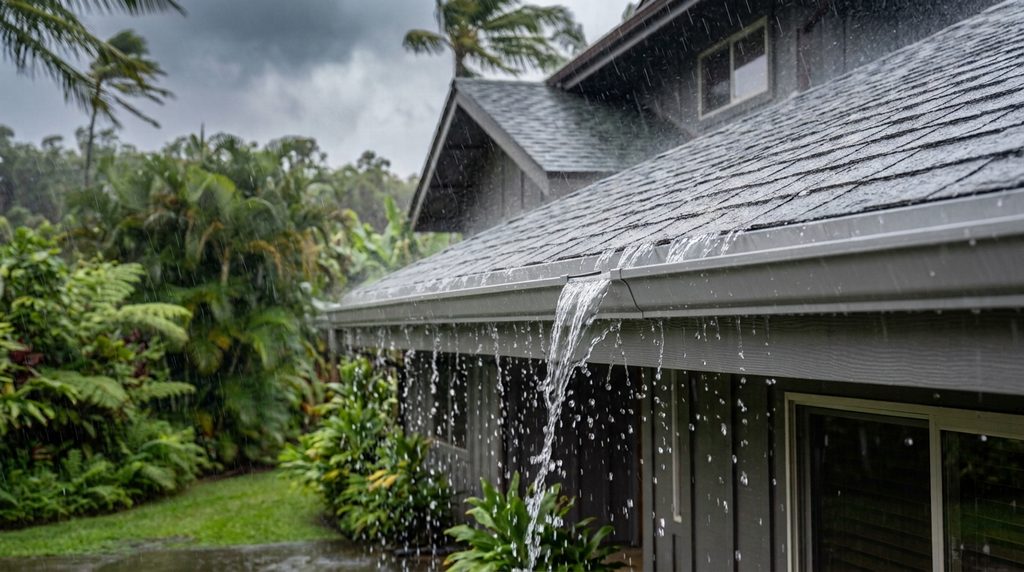
A roof isn’t only there to keep water out — it also has to move water somewhere once it lands. Valleys on pitched roofs collect runoff from multiple roof planes and channel it down toward the gutters, which then carry it away from the house. Flat or low-slope roofs rely on drains and scuppers to do the same job.
Problems show up when those pathways get blocked. Leaves, seed pods, and general debris build up over time, and during light rain the water often still finds a way through. During a heavier downpour, though, the volume can simply overwhelm a partially clogged path, and water backs up, pools, or gets forced underneath roofing materials instead of past them. This is a bigger issue than usual in Hawaii’s greener neighborhoods, particularly near mature Monkeypod, Mango, and Albizia trees, where debris accumulates faster than most homeowners expect. Regular gutter and drainage maintenance is one of the easiest ways to head this off before it becomes a leak.
4. A Roof Penetration That’s Lost Its Seal
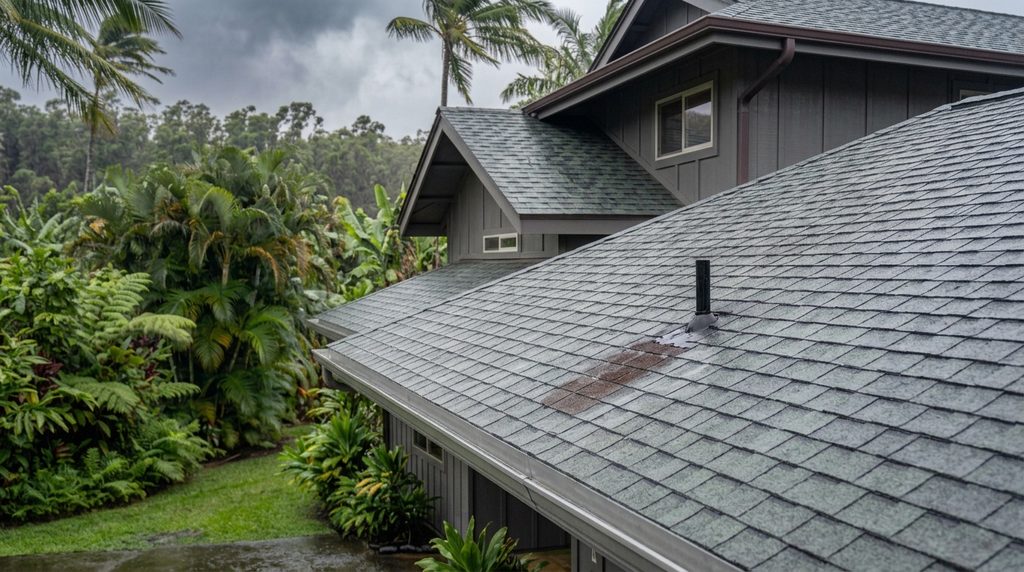
Anything that passes through your roof — plumbing and exhaust vents, skylights, solar mounts, HVAC equipment, antennas — creates a spot that has to be carefully sealed to stay watertight. None of that is a problem when it’s installed correctly. The issue comes later, once boots, fasteners, and sealants start to degrade.
This shows up more often than you’d think on homes with rooftop solar, simply because the added mounting hardware means more penetration points to keep sealed over time. Heavy rain has a knack for finding these small failures, and the frustrating part is that the spot causing the leak can look completely normal from the ground. Usually, it takes a closer inspection to actually track it down.

5. Roofing Materials That Have Worn Out or Been Damaged
Sometimes the leak traces back to the roofing material itself — missing or lifted shingles, cracked tiles, loose fasteners, damaged metal panels, worn membranes, or spots where a falling branch did some quiet damage nobody noticed.
A defect like that might let almost no water through under normal conditions. Add hours of heavy rain and wind, and the same spot can behave very differently. That’s also a good reason not to write off minor roof damage just because nothing’s leaking yet — the roof simply may not have faced the conditions that would expose it.
The Ceiling Stain Isn’t Always Right Below the Leak
Here’s something that catches a lot of homeowners off guard: a stain on your dining room ceiling doesn’t necessarily mean the roof is leaking directly above it. Once water gets into a roofing system, it can travel — along decking, framing, pipes, wiring, or insulation — before gravity finally pulls it down into a visible spot inside the house.
In other words, the stain shows you where the water ended up, not where it got in. That’s part of why tracking down a roof leak is rarely as simple as looking straight up from the damage. Finding the actual entry point matters, because fixing only the visible symptom leaves the real problem free to keep going.
If the Leak Stops When the Rain Does, Is It Still Worth Worrying About?
Yes — and this is probably the single most important thing to understand about intermittent leaks. Once water has found its way in somewhere it shouldn’t, that’s already evidence of a weak spot, whether or not the ceiling looks dry again by morning.
A ceiling drying out doesn’t mean everything above it dried at the same rate, or that no damage happened at all. Moisture can quietly affect roof decking, insulation, drywall, wood framing, paint, electrical components, and attic spaces, and repeated exposure creates exactly the conditions mold, mildew, and wood rot need to take hold — something that comes up more often in Hawaii’s humidity than it would in a drier climate, since trapped moisture just doesn’t dry out as fast here. The next storm can send water through that same opening again, or the opening can simply get worse. Catching it early is usually the difference between a manageable repair and a much bigger one.
What to Do When You Discover a Roof Leak
Start by protecting the people and belongings in the affected area. Move furniture, electronics, and anything else worth saving out of the way if it’s safe to do so and use a container to catch dripping water and towels to protect the flooring. If the leak is anywhere near electrical fixtures, outlets, or wiring, treat that seriously and keep clear of it.
It also helps to take photos of the water intrusion and jot down when it happened and what the weather was doing at the time — how heavy the rain was, whether it was windy, which direction it seemed to be coming from. That kind of detail can genuinely help a roofer narrow down the source later.
One thing not to do: climb onto the roof during or right after heavy rain. A wet roof is slippery, and whatever damage is causing the leak may have made certain spots less stable than they look. Inspection and repair should wait until conditions make it safe to do the work properly.
Had a leak after the last storm? It’s worth finding out how serious it is before the next one rolls through. Schedule a professional roof inspection with Kokua Roofing and get a straight answer on what’s causing it.
Repair or Replace? A Few Things to Weigh First
Finding a leak doesn’t automatically mean you’re due for a new roof. Plenty of leaks come down to something isolated and fixable — a flashing detail that needs attention, a penetration that needs re-sealing, damaged material in one section, or a drainage issue that’s easy enough to correct once you know where it is.
The bigger question is how the roofing system is holding up overall, and a few rough guidelines can help you get a sense of that before a professional weighs in:
- Age of the roof. A leak on a roof that’s under 10–15 years old, with the rest of the materials still in decent shape, is usually a good candidate for a straightforward repair.
- How often you’ve had to fix something. If this is your third or fourth leak in the past couple of years, that pattern points more toward a system nearing the end of its life than a string of unrelated bad luck.
- How much of the roof is affected. One compromised penetration or a short stretch of worn flashing is a very different situation than material wear spread across multiple sections of the roof.
- Typical lifespan for the material. Asphalt shingle, metal, and tile roofs each wear differently, and a roof nearing the upper end of its expected lifespan may only get a few more years out of a repair.
None of these on their own settle the question, which is why it’s worth having someone actually walk the roof and evaluate the whole system rather than guessing from one leak. From there, the goal is figuring out why the leak happened and whether repair or replacement actually gives you the better long-term outcome — not defaulting to whichever one sounds easier.
Why Heavy Rain Hits Differently Depending on Where You Live in Hawaii
Heavy rain is nothing unusual in Hawaii, but how hard it hits varies a lot by location. Windward Oahu, the wetter Hilo and Hamakua sides of the Big Island, and higher-elevation spots on Maui and Kauai typically see far more rain — and more sustained rain — than leeward or coastal areas just a few miles away on the same island. Add in the surrounding vegetation, the design of the roof itself, and which way the house faces relative to the trade winds, and you get a lot of variation in how any given roof holds up under pressure.
Wind adds another layer to that. Water that drains fine on its own can behave completely differently once wind is pushing it sideways, and debris tends to pile up fast in gutters and valleys where there’s heavy tree cover nearby. Small defects that never show themselves during a mild season can suddenly become obvious the first-time conditions actually test them.
That’s really the case for local roofing expertise: evaluating a roof here isn’t just about spotting a lifted shingle or dabbing on some sealant. It’s about understanding how the whole system performs in the specific microclimate around that home — whether that’s a windward Oahu neighborhood, a Hilo-side property, or a home up in elevation on Maui.
Don’t Wait for the Next Downpour to Find Out What Your Roof Can Handle
It’s easy to move on once the rain stops — the bucket goes back in the garage, the ceiling dries, and life keeps going, right up until the next storm rolls through. But the roof has already told you something useful: water got in somewhere it shouldn’t have.
The stretch of dry weather between storms is really the best window to figure out why. A proper roof inspection can pin down where the water is getting in, check whether moisture has already affected the surrounding structure, take stock of the roof’s overall condition, and tell you whether a targeted repair or something bigger makes more sense. From there, you’re not left guessing what happens the next time it really pours — you’ll actually know where things stand.
Frequently Asked Questions About Roof Leaks During Heavy Rain
Why does my roof leak during heavy rain but not light rain?
Heavy rain means more water volume, often paired with wind that pushes rain into spots it wouldn’t normally reach. A small gap around flashing, a penetration, a valley, or a drainage path can stay watertight through light rain but let water through once conditions get more demanding.
Can wind cause a roof to leak even if the roof isn’t damaged?
Yes, in a sense — wind-driven rain can expose weak points that ordinary rainfall never tests. Water gets pushed toward roof edges, vents, flashing, and transitions from angles those areas don’t usually have to handle, which is common on windward-facing homes across Hawaii.
Does a roof leak mean I need a new roof?
Not necessarily. Many leaks are isolated and repairable, especially if the rest of the roof is in reasonably good shape. Roof age, how often it’s needed repairs, and how much of it is affected all factor into whether repair or replacement makes more sense — though a professional inspection is the most reliable way to know for sure.
Can clogged gutters cause a roof leak?
Yes. Blocked gutters or drains can force water to back up or overflow into places it isn’t supposed to go, which is a common problem in Hawaii neighborhoods with a lot of tree cover. Keeping drainage paths clear is one of the simplest forms of preventative maintenance.
Why can’t I find where my roof is leaking?
Because the spot where water shows up inside your house often isn’t where it entered the roof. Water travels along decking, framing, pipes, and other surfaces before it finally becomes visible somewhere inside.
Should I have my roof inspected after heavy rain?
If you’ve noticed water intrusion, new ceiling stains, displaced roofing materials, or anything unusual with drainage after a storm, yes — that’s a reasonable time to get it looked at. It’s also worth an inspection after a particularly severe storm even if you haven’t spotted damage yet.
Is a small roof leak an emergency?
It depends on the specifics. Water near electrical components, a sagging ceiling, or leakage that’s clearly getting worse needs attention right away. A minor, intermittent leak isn’t necessarily an emergency, but it shouldn’t be ignored either.
The Bottom Line
A roof that leaks during heavy rain isn’t just reacting to bad weather — it’s telling you something about the condition of the system protecting your home. Sometimes that’s a simple fix. Other times it’s an early warning sign of something bigger. Either way, finding out sooner just gives you more options.
At Kokua Roofing, we work with homeowners across Oahu, the Big Island, Maui, and Kauai to figure out what’s actually going on with a roof before recommending what to do about it. A thorough inspection can identify where water is getting in, whether it’s caused any damage beyond what you can see, and whether a repair or a bigger fix makes more sense for your situation.
If your roof leaked during the last big storm — or you’re just not confident it would hold up through the next one — schedule a professional roof inspection with Kokua Roofing.